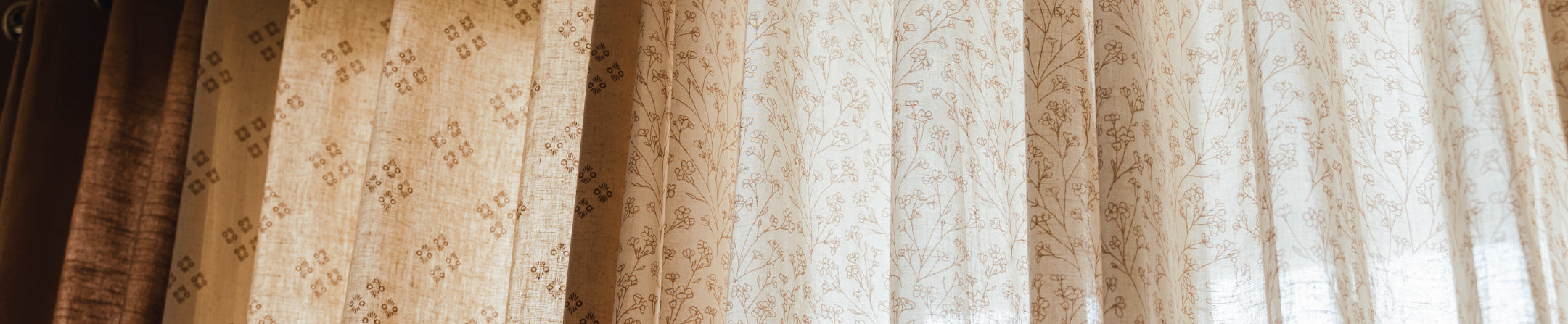

You have picked the fabric, waited for the curtains to arrive, and finally put them up only to realise something feels off. They look shorter than expected, don’t fall in soft folds, or sit awkwardly on the rod. What looked perfect in your mind doesn’t quite translate onto the window.
This usually comes down to measurement. Most curtain mistakes happen when you measure only the window, skip fullness, choose the wrong length, place rods too low, or ignore how curtains gather when hung. Our professionals approach it differently. They measure from the rod or track, plan for fullness, place hardware with intention, and consider how the fabric will fall once installed.
Curtains can completely change how a room feels. They soften harsh lines, improve privacy, and make spaces feel more finished. But even well-designed curtains can fall flat when the measurements are off.
This is where things often go wrong. Curtains may look too narrow, too short, or awkwardly placed, even if the fabric itself is beautiful. This is usually where things start to feel off. Most of these issues come from a few common mistakes that are easy to overlook but just as easy to fix once you know what to watch for.
Why Curtain Measurements Affect More Than Just Fit
Curtain measurements do more than ensure coverage. They shape how the entire room is perceived. A narrow curtain can make a window feel smaller. A short curtain can interrupt visual flow. A poorly placed rod can make ceilings appear lower than they are—even in well-designed homes.
This becomes even more noticeable when working with natural fabrics like cotton and linen. These materials are valued for their soft drape and relaxed finish. But that effect only comes through when the proportions are right. Without proper width and length, even when the fabric itself is beautiful, it can lose its impact.
This is exactly where many homeowners prefer to get guidance early on. Instead of relying on guesswork, our professionals help plan curtain placement, fullness, and proportions during an Expert Home Visit. It ensures that the final result feels intentional right from the start, rather than something that needs fixing later.
The Most Common Curtain Measurement Mistakes Homeowners Make
Measuring the Window Instead of the Curtain Rod or Track
One of the most common mistakes is measuring only the window frame. Curtains don’t hang from the glass. They hang from the rod or track. It’s an easy mistake to make, especially when you’re trying to keep things simple.
When you measure only the window, you often end up with curtains that feel too narrow. Our experts instead measure the full span that the curtains need to cover, including extra space on both sides. This allows the curtains to sit neatly when open without blocking light.
If the rod is not installed yet, it’s important to plan how far it will extend beyond the window before measuring.

Choosing Curtain Width Without Calculating Fullness
Curtains are not meant to sit completely flat against a window. Without enough fabric, they can end up looking slightly flat or less finished.
Fullness refers to the extra width that helps create soft folds. It plays a key role in how polished and balanced the curtains appear once hung.
As a general guide:
-
Around 1.5x fullness can create a cleaner, more structured look
-
Around 2x fullness is often considered the most balanced option
-
Around 2.5x fullness can give a richer, more layered feel
The right choice usually depends on the overall style you’re aiming for and how relaxed or tailored you want the curtains to look.

Getting the Curtain Length Wrong
Length has a strong visual impact. Curtains that are too short can make the room feel slightly incomplete, as if something is missing. Curtains that are too long may bunch in a way that looks unintentional rather than styled.
Instead of guessing, our expert home service decides the final look first and then measures for it.
Common finishes include:
-
Slightly above the floor for practicality
-
Just touching the floor for a clean, balanced look
-
A soft puddle for a more decorative style
For most modern homes, a floor-touching finish tends to feel the most natural and easy to maintain.

Hanging the Curtain Rod Too Low or Too Narrow
Rod placement is often underestimated. When rods are placed too close to the window frame, they can visually shrink the window.
A better approach is to mount rods slightly higher and extend them beyond the frame. This helps create the impression of height and allows curtains to stack neatly on the sides when open.
Even a small adjustment in placement can significantly improve how the window looks.
 Forgetting About Stack-Back Space
Stack-back is the space curtains occupy when they are pulled open. If this is not considered, open curtains can still cover part of the window, reducing natural light.
Our experts plan for this by extending the rod width. This allows the curtains to sit fully off the window area when open, making the space feel brighter and less crowded.
Ignoring Header Style Before Finalising Measurements
Curtain style directly affects how measurements should be calculated, because each style gathers fabric differently. Different header styles use fabric in their own way.
For example:
-
Pleated styles use more fabric and reduce usable width
-
Eyelet or loop styles create more relaxed folds
-
Some styles come with built-in fullness, while others need extra width to achieve the same effect

Measuring Before Accounting for Hardware and Installation Details
Small details like brackets, rod thickness, and rings can affect the final outcome more than expected.
Measuring too early, before hardware placement is decided, can lead to errors in both width and drop. A more reliable approach is to plan or install the hardware first, then take final measurements from the actual hanging point.
How Our Professionals Measure Curtains Step by Step
Experts follow a simple but structured approach.
First, they decide the rod or track placement. Then they measure the full width that needs to be covered, not just the window.
Next, they calculate fullness based on the desired look. After that, they measure the drop from the actual hanging point to the intended end position.
Finally, they account for stack-back, header style, and how the curtain will sit when open and closed.
This sequence helps avoid most of the common mistakes seen in DIY measuring.
Curtain Width Formula: How Much Fullness Do You Really Need?
A simple formula can make curtain width easier to plan:
Curtain width = rod width × fullness ratio
For example:
If your rod is 60 inches wide and you choose 2x fullness, you need 120 inches of total curtain width.
From there, you divide the total across panels. The key is to think in terms of usable coverage rather than just fabric width, since gathering and styling reduce how much area each panel actually covers.
Curtain Length Guide: What Our Professionals Usually Recommend
There is no single rule for curtain length, but there are a few reliable options.
A slight float above the floor works well for everyday practicality. Curtains that just touch the floor offer a clean and balanced look. A puddled finish can feel softer and more decorative, but requires more upkeep.
Choosing the right length depends on how the space is used, not just how it looks.
When Standard Measuring Advice Does Not Work
Some windows require a more thoughtful approach.
Very wide windows, corner setups, balcony doors, and layered curtains often need more precise planning. Uneven flooring or ceiling-mounted curtains can also change how measurements should be taken.
In these cases, simple formulas may not be enough, and it helps to consider how the curtains will actually function in the space.
When It Helps to Have Professional Measurement Support
Measuring curtains can feel straightforward at first, but small miscalculations can lead to noticeable results. This becomes more critical with larger windows, layered setups, or custom curtains in natural fabrics like cotton and linen.
This is where many homeowners choose to rely on expert guidance. With The Yellow Dwelling’s Expert Home Service, our professionals visit your home, take precise measurements, and guide you through fabric selection, curtain styling, and placement decisions.
The consultation also helps you understand how different curtain styles or Roman blinds will work within your space, ensuring everything fits and functions well together.
The service is available at a nominal fee of ₹449 and is designed to make the entire process simpler, more accurate, and more reassuring.
What to Keep in Mind When Choosing Curtains After Measuring
Once measurements are sorted, fabric choice plays a key role in how the final result looks.
Natural materials like cotton and linen tend to fall more softly and create a relaxed, breathable feel. They work well across different room styles and adapt easily to both minimal and layered setups.
The combination of correct measurements and the right fabric is what ultimately creates a balanced and finished look.
Curtain Measurement Checklist Before You Place an Order
Before placing your order, it helps to double-check:
-
Final rod or track width
-
Extension on both sides
-
Drop from the actual hanging point
-
Fullness ratio
-
Number of panels
-
Curtain style or header type
-
Stack-back allowance
-
Floor finish
-
Hardware details
- Final measurement review
Conclusion
Most curtain issues usually come down to a few avoidable measurement decisions. Measuring only the window, skipping fullness, or placing rods without much planning can all change how the curtains finally look.
When these details are thought through together: placement, width, length, and fabric, curtains tend to sit better and feel more intentional. That is what gives a space a more finished and balanced look.