
Professional curtain measurement is worth it for large windows, custom designs, layered treatments, and Roman blinds. It ensures correct rod placement, proper fullness, and a balanced fall. If you want curtains to look polished, expert measurement helps avoid costly mistakes and delivers a refined finish.
Curtains can look expensive and still fall flat. The issue is rarely the fabric. It is almost always the measurement. A few inches off in width, height, or placement can change how the entire room feels. Curtains may look short, too tight, uneven, or poorly aligned.
Most buyers focus on colour and fabric first. But what actually determines the final look is how the curtains are measured, placed, and finished. This is where many people begin to wonder, “Should I measure them myself, or is it worth getting professional help?”
Why Curtain Measurement Affects More Than Just Fit
Curtain measurement is not just about covering a window. It shapes how the curtains fall, how the window looks, and how the room feels.
When measurements are planned correctly, curtains create soft folds and natural movement. They frame the window and can even make the ceiling appear higher or the room feel wider. When done poorly, the same curtains can look stiff, uneven, or undersized.
The way curtains stack when opened, the amount of light they block, and how neatly multiple windows align. All of this depends on accurate measurement. This is why measuring curtains is not the same as measuring the window frame. It involves rod placement, fullness, and spacing, not just width and height.
When is Professional Curtain Measurement Actually Worth It?
Large Windows and Floor-to-Ceiling Openings
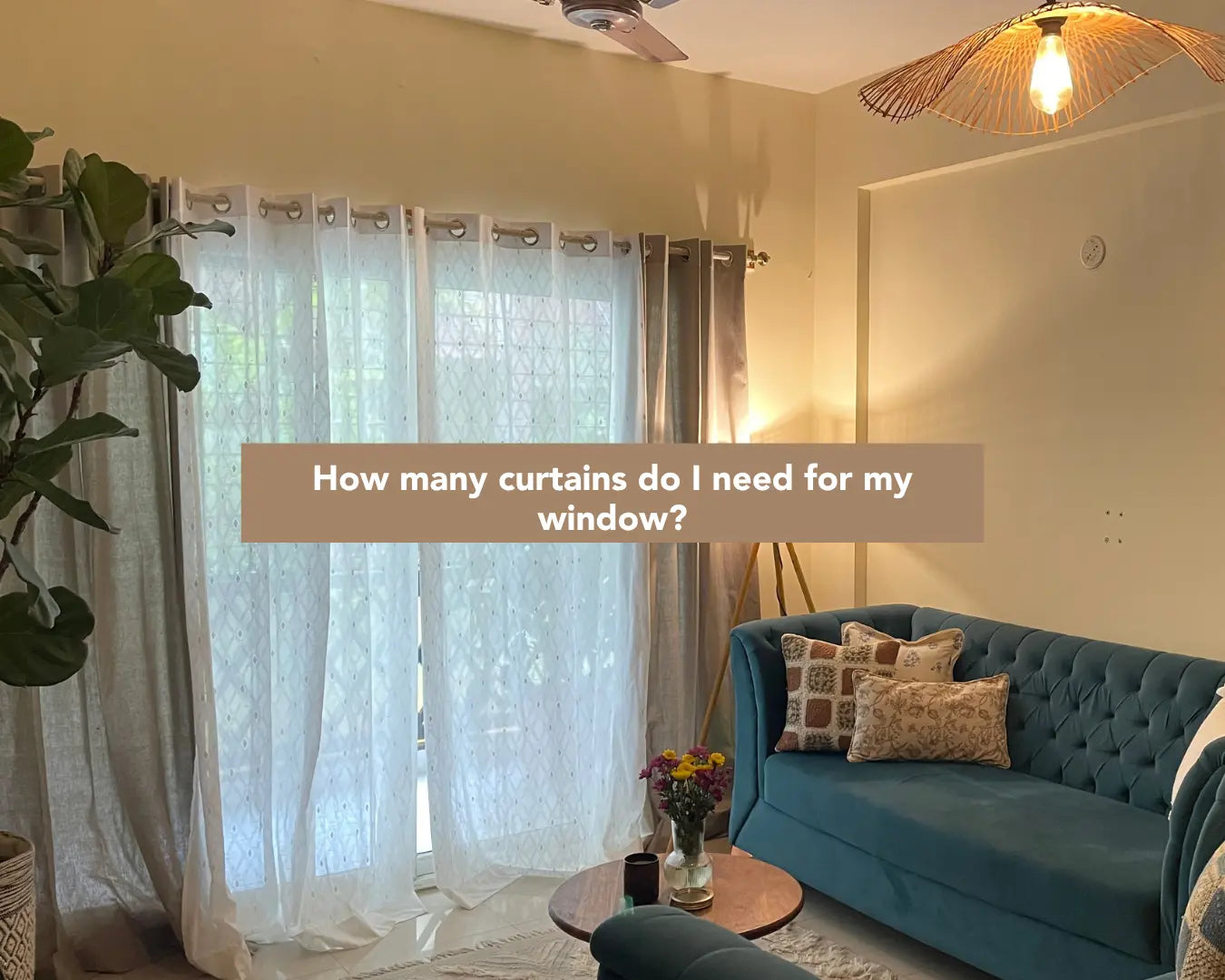
Larger windows leave very little room for error. A small miscalculation in width or drop becomes immediately visible. Most common mistake in large windows is hanging the curtains too close to the window, this makes the whole room look small. When space permits, large windows should be draped from ceiling to floor and wall to wall. When they are hung this way, they make the whole space more grand and complete.
Fullness also becomes more important in wider spans. Without enough fabric, the curtains can look stretched and flat. Professional measurement ensures the right balance so the curtains fall naturally and maintain a premium look.

Custom Curtains in Cotton or Linen
When you invest in custom curtains, especially in premium natural fabrics like cotton and linen, the expectation is a clean, tailored finish. These fabrics are known for their soft drape and timeless appeal, but they need the right measurements to look their best.
Incorrect sizing can affect how the fabric falls and may lead to unnecessary adjustments or replacements. Professional measurement helps ensure that natural fabric curtains hang well and maintain their intended look.

Multiple Windows in the Same Room
In many homes, especially living rooms and bedrooms, there are multiple windows placed close together. Even if they look identical, slight differences in size or level can create visible misalignment.
Curtains that sit at different heights or lengths can make the room feel unfinished. A professional approach ensures that all windows are measured individually and aligned visually, creating a more cohesive result.

Bay Windows, Corner Windows, and Unusual Layouts
Some windows are not straightforward. Bay windows, corner layouts, or angled walls require more planning than standard windows.
The curtain placement needs to account for angles, overlaps, and how the fabric will move when opened or closed. These setups often require adjustments in rod placement and panel distribution. Professional measurement helps avoid awkward gaps or uneven coverage.

Layered Window Treatments
Layering curtains with sheers or combining curtains with Roman blinds adds depth and functionality to a space. However, it also adds complexity.
Each layer needs enough room to function without interfering with the others. Spacing, projection, and stacking all need to be planned together. Without proper measurement, layers can overlap incorrectly or feel crowded.
Since The Yellow Dwelling offers Roman blinds along with curtains, this becomes especially relevant. Proper planning ensures both elements work together seamlessly.

Tracks, Header Styles, and Design-Led Installations
The way curtains are stitched and installed also affects measurement. Each hardware work well with particular header styles, for example, eyelet and backtab styles work well on rods where as pleated, ripple fold/ wave style curtains work well on tracks.
Each header style changes how the curtain falls and how much fabric is needed. Professional measurement takes these details into account so that the final result matches the intended design.

Signs Your Window Is Not As “Simple” As It Looks
Many windows seem easy to measure at first glance. But small details can complicate the process.
If the floor is slightly uneven, curtains may appear longer on one side. If the ceiling line is not level, rod placement becomes tricky. Furniture placed below the window can affect the curtain length. Deep window trims or handles may require additional spacing.
Even deciding whether to mount the rod closer to the ceiling or just above the frame can change the final look significantly. These small factors are often missed during DIY measurement but make a visible difference in the outcome.
What a Professional Measures That Many DIY Buyers Miss
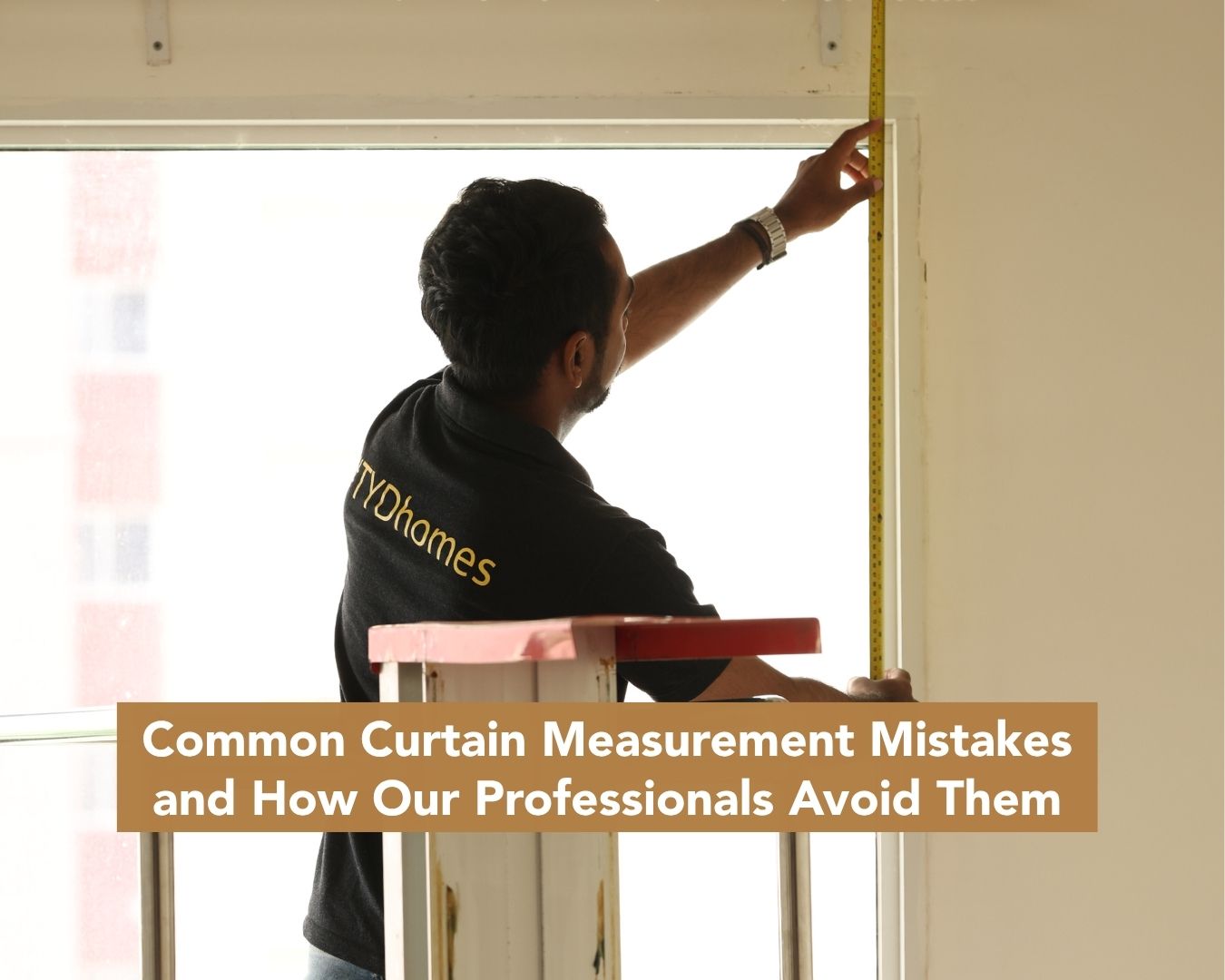
When you measure curtains yourself, you may focus only on width and height. But professionals look at the complete picture.
They consider the final rod or track width, where the rod should be placed, and how far it should extend beyond the window. They calculate the fullness required to create soft folds and decide the finished drop based on floor clearance.
They also account for how much space the curtains will take when opened, known as stack-back. Fabric type, lining, and whether the curtains are paired with Roman blinds are also factored in.
These details may seem small, but they determine whether the curtains look average or well-designed.
DIY vs Professional Curtain Measurement: How to Decide
DIY measurement can work when the setup is simple. If you have one or two standard windows and are using straightforward curtain styles, measuring on your own may be enough.
However, when you are working with custom curtains, larger windows, multiple openings, or layered treatments, professional help becomes more valuable. It reduces the chances of mistakes and helps achieve a more refined finish.
The decision often comes down to how important the final look is to you and how comfortable you are with measuring and planning.
Can You Measure Curtains Yourself First?
If you want to get a basic idea before consulting an expert, you can start with a few simple checks.
Measure the full width of the rod or the planned track, not just the window. Decide how full you want the curtains to look, keeping in mind that fuller curtains require more fabric.
Measure the drop from the rod to the floor carefully. Check how high the rod will be placed and how far it will extend beyond the window frame. Also, decide the header style before finalising sizes, as it affects how the curtains fall.
This basic understanding helps you plan better, even if you later choose professional assistance.
Common Curtain Measurement Mistakes That Change the Final Look
Many issues arise from simple oversights. Measuring only the window instead of the rod often leads to insufficient coverage. Ignoring fullness results in curtains that look flat.
Hanging curtains too low can make the room feel shorter. Using the same measurement for all windows without checking each one individually can create uneven results.
Another common mistake is deciding the curtain style after finalising the size. The header style and lining can change how the curtains behave, so they should be considered early.
What You Get with The Yellow Dwelling Expert Home Service
If you prefer a more seamless approach, The Yellow Dwelling offers an Expert Home Service designed to simplify the entire process.
A trained expert visits your home, takes precise measurements, and helps you choose the right fabrics from a curated range of premium cotton and linen curtains. You also receive guidance on styling, rod placement, and whether curtains or Roman blinds would work better for your space.
The service includes support for fittings, design suggestions, and a clear estimate for your setup. It is designed for those who want a well-planned result without second-guessing measurements.
This is a paid service with a nominal fee of ₹449, ensuring dedicated consultation and accurate planning.
For customers in cities like Mumbai and Pune, this home curtain service makes it easier to work with curtain experts who understand both design and functionality.

Is Professional Curtain Measurement Worth the Cost?
When you look at the overall investment in curtains, especially custom-made ones, the cost of incorrect measurement can be much higher than the cost of getting it right the first time.
Alterations are not always simple. Reordering delays your setup and adds to the expense. A small miscalculation can affect how the curtains look every day.
Professional measurement is less about spending extra and more about avoiding mistakes, especially when working with premium materials and custom designs.
Final Verdict
If your windows are simple and you are confident about rod placement, fullness, and length, you can measure curtains yourself. But when you are working with custom curtains, natural fabrics like cotton and linen, Roman blinds, or larger and more complex spaces, professional measurement makes a clear difference.
It helps you move from “good enough” to a finish that feels complete and thoughtfully designed.