
Most standard windows need two curtain panels: one on each side. However, wider windows often need three or four panels to achieve proper coverage and fullness. But this calculation depends on the width of the window and the width of the fabric.
A simple way to calculate this is:
Number of panels = (Curtain rod width × Fullness ratio) ÷ Single panel coverage
For example, if your curtain rod is 100 inches wide and you want a fuller look with a curtain that provides 25 inches coverage (2x fullness), you’ll need around 4 panels.
The exact number depends on a few key factors:
-
Your curtain rod width
-
The fullness you prefer (how rich and gathered the curtains look)
-
The width and coverage of each panel
-
Whether you’re using lining or pleated styles
Many people end up buying too few curtains. The result? Windows that look flat, incomplete, or poorly covered.
The number of curtain panels you choose affects not just how your window looks, but also how well your curtains function. Light control, privacy, and overall styling all depend on getting this right.
The good news is that you don’t need complicated math. Once you understand how rod width, fullness, and panel coverage work together, it becomes much easier to choose the right number of curtains. Or if this is all too overwhelming and you do not want to make a mistake, book our Expert Home Service.
Start Here: Measure Your Curtain Rod, Not Just the Window
A common mistake is measuring only the glass portion of your window. But curtain planning always starts with the curtain rod width, not just the window size.
Curtain rods are usually installed wider than the window frame. This allows the curtains to stack neatly on the sides and makes the window appear larger.
Ideally, your rod should extend 4 to 8 inches beyond the window on each side, or even more if you want a more spacious look.
When curtains are drawn open, some fabric sits on the sides. That space needs to be accounted for. If you only measure the window, you may end up with curtains that feel too tight or insufficient.

The 3 Things That Decide How Many Curtains You Need
Curtain Rod Width

The wider your curtain rod, the more fabric you need to cover it. Larger windows or sliding doors naturally require more panels.
Curtain Fullness Ratio
Fullness refers to how much extra fabric you use to create soft folds instead of a flat sheet.
-
1.5x fullness gives a neat and structured look
-
2x fullness is the most balanced and commonly recommended
-
2.5x fullness creates a richer, more premium drape
If you are investing in premium natural fabric curtains, a fuller look enhances the texture and softness of the fabric.

Single Panel Coverage (Important)
This is where many people get confused.
A curtain panel’s fabric width is not the same as its usable coverage once it is hung.
At The Yellow Dwelling:
-
Each panel is typically 60 inches wide
-
Once gathered, it provides around 30 inches of coverage
-
With blackout lining, coverage reduces to about 25 inches
-
With pleated headers, coverage is about 26 inches
This difference is crucial when calculating how many panels you need.
Use This Simple Formula to Calculate Curtain Panels
To make things easier, use this formula:
Panels needed = (Rod width × Fullness ratio) ÷ Panel coverage
Let’s break this down with examples.
If your rod width is 60 inches and you want a fuller look (2x):
-
Total width needed = 60 × 2 = 120 inches
-
Each panel covers about 30 inches
-
Panels needed = 120 ÷ 30 = 4 panels
For a smaller window of 48 inches with 1.5x fullness:
-
Total width needed = 48 × 1.5 = 72 inches
-
Panels needed = 72 ÷ 30 = 2.4
In this case, you would typically round up. You can either use 3 panels, or opt for 4 panels for better symmetry and fullness.
Sometimes, instead of using multiple narrow panels, they can be stitched together into two larger panels for a cleaner look.
Quick Curtain Panel Guide by Window Width
To simplify your decision, here’s a general guideline based on curtain rod width:
-
Up to 4 feet: 2 panels work well
-
4 to 6 feet: 2 panels for a basic look, 4 panels for better fullness
-
6 to 8 feet: 4 panels recommended
-
8 to 10 feet: 4 to 6 panels depending on fullness
-
10 to 12 feet: 6 panels or custom planning
If you are using lined or pleated curtains, you may need slightly more width since effective coverage reduces.
Is One Curtain Panel Ever Enough?
Yes, but only in specific situations.
A single panel can work for very narrow windows or for decorative styling where the curtain is fixed to one side. It is also sometimes used in compact spaces.
However, for most windows, two panels create better balance and symmetry. When you draw curtains open, having one panel on each side feels visually complete.
Even-numbered panels also allow for a cleaner and more structured look.
Why Curtains Sometimes Look Too Flat or Too Crowded
If you’ve ever seen curtains that look “off,” it usually comes down to incorrect panel calculation.
When there are too few panels, the fabric stretches across the rod. The folds disappear, and the curtain looks flat and underwhelming.
On the other hand, too many panels can make the window look heavy and bulky. The fabric may not stack neatly on the sides.
The goal is to find the right balance where the curtains fall naturally, with soft folds and proper coverage.

What Changes the Calculation? Lining, Header Style, and Fabric
Blackout or Room-Darkening Lining
Lining adds thickness to the curtain. This reduces how much width each panel can effectively cover. That’s why lined curtains often need more panels than unlined ones.
Pleated Curtains

Pleats consume more fabric at the top. While they look structured and elegant, they reduce usable width. This means you may need extra panels for the same window.
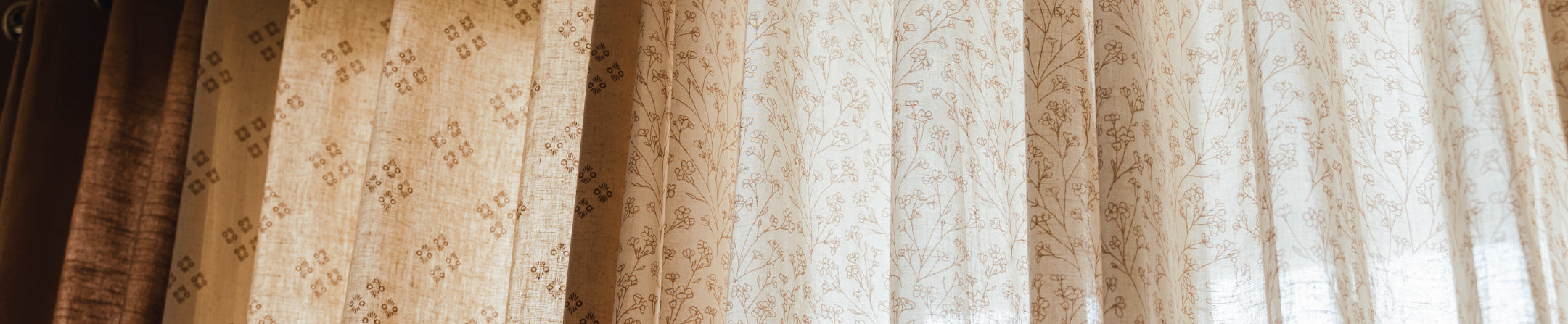
Natural Cotton and Linen Curtains
Curtains made from cotton and linen behave differently from synthetic fabrics.
They drape softly, allow airflow, and create a more relaxed yet refined look. To truly highlight their texture, a slightly fuller setup often works best.
This is where premium natural fabric curtains stand out. They bring both visual warmth and practical comfort, especially in Indian homes.
Should You Buy More Panels or Stitch Them Into Two Larger Curtains?
For wider windows, you might calculate that you need multiple panels. But that doesn’t always mean you need to hang many separate pieces.
A smart option is to have panels stitched together into two wider curtains. This keeps the symmetry intact while still achieving the required width.
It’s a practical solution when you want a cleaner, more premium look without breaking the curtain into too many sections.

Curtains or Roman Blinds: What Works Better?
Curtains are ideal when you want softness, movement, and layered styling. They work beautifully in living rooms and bedrooms where texture matters.
Roman blinds, on the other hand, offer a more structured and minimal look. They are especially useful in compact spaces or windows where you want a neat finish without extra fabric on the sides.
Both options can work well depending on your space and design preference.

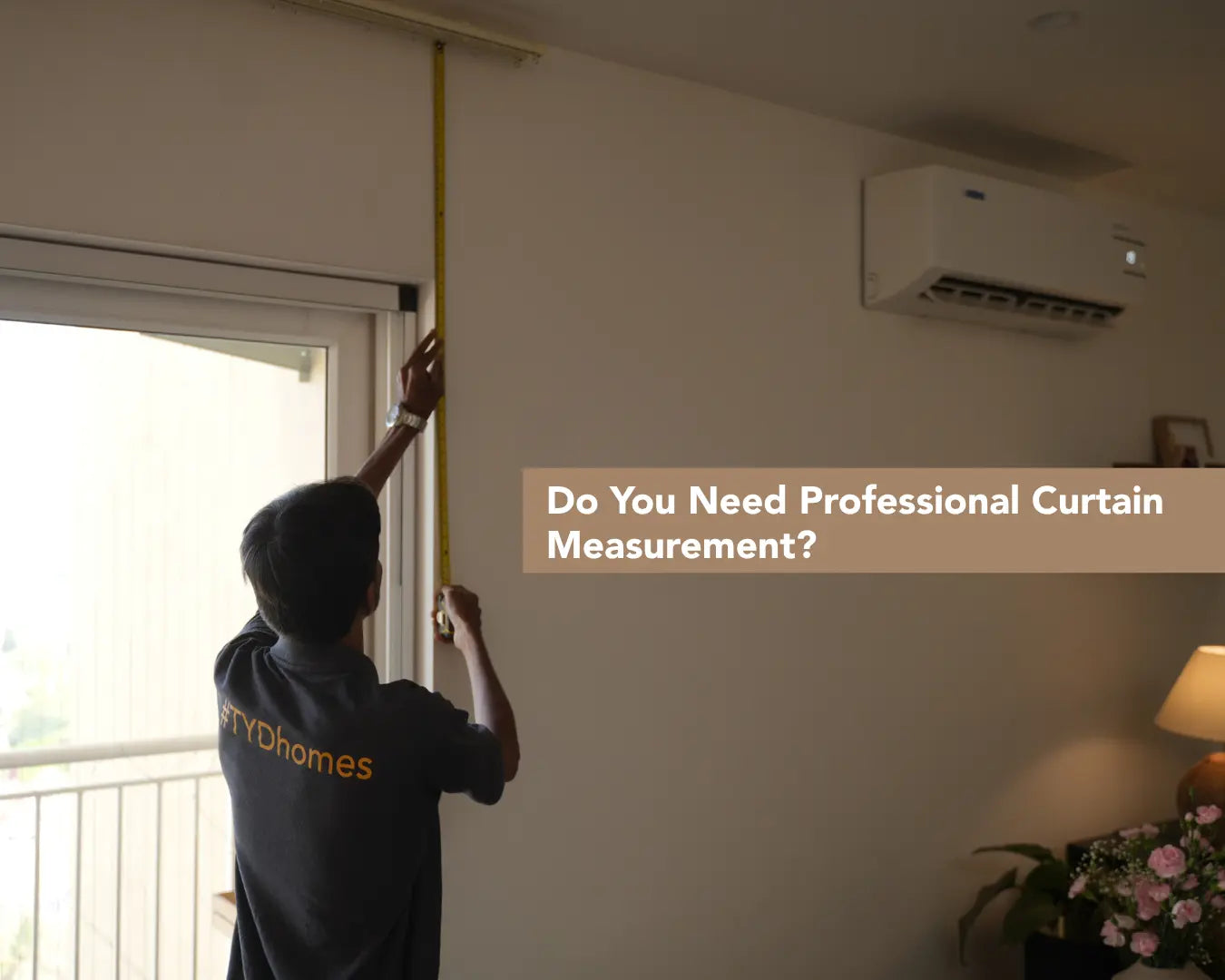
When It’s Better to Use Expert Help Instead of DIY Measuring
Curtain measurement may seem simple, but small mistakes can lead to expensive corrections.
Common issues include:
-
Measuring only the window instead of the rod
-
Not accounting for fullness
-
Ignoring fabric coverage differences
-
Choosing incorrect panel combinations
If you want to avoid these problems, it helps to get professional guidance.
The Yellow Dwelling offers an Expert Home Service, where a specialist visits your home, measures your windows accurately, and helps you choose the right fabrics and styles.
This is a paid service at ₹449, designed to make the process easier and more reliable. It is especially useful if you are planning curtains for multiple rooms or larger spaces.

Conclusion
Choosing the right number of curtains comes down to a few simple steps. Measure your curtain rod, decide how full you want your curtains to look, and calculate how much coverage each panel provides.
When done right, curtains don’t just cover your window. They shape how your entire room feels.
If you’re unsure about measurements or want a more refined finish, getting expert guidance can make all the difference. With premium cotton and linen curtains designed for Indian homes, The Yellow Dwelling offers both the materials and the support you need to get it right the first time.