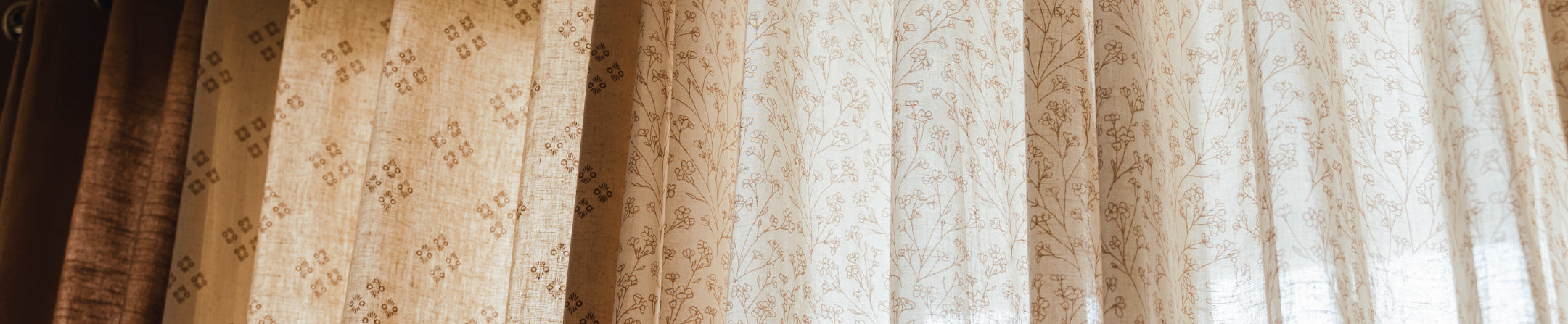

Yes, blackout curtains can help support better sleep by reducing unwanted light and creating a darker bedroom environment. They are especially useful in bedrooms facing morning sun, homes near streetlights, apartments with outside light spill, and households with children, seniors, or shift workers.
Block-out curtains can also make the bedroom feel more settled through the seasons. By reducing harsh sunlight during summer and helping cut down cold drafts during winter, they support a more comfortable room environment without claiming to “fix” sleep on their own.
At The Yellow Dwelling, blackout curtains bring this function into a softer, design-led space with premium natural fabrics, cotton and cotton-linen blends, and thoughtful light-block choices. Read on to understand the nuances of choosing blackout curtains for better sleep. And if the fabric, lining, size, or light-block decision feels overwhelming, you can leave the measuring and matching to us through The Yellow Dwelling’s Expert Home Service, where our experts help with accurate measurements, fabric selection, and installation support.
The Short Answer: Yes, Because Darkness Supports Better Sleep

A darker bedroom can make it easier for the body to wind down. Sleep guidance often recommends keeping the bedroom dark, quiet, cool, and relaxing because light can make it harder to fall asleep or stay asleep.
Blackout curtains help by blocking one of the biggest sources of unwanted bedroom light: the window. They are useful when streetlights, vehicle headlights, early sunrise, or neighbouring buildings keep sending light into the room. They may also help the bedroom feel more comfortable by reducing strong daytime heat and adding an extra layer between the window and the room.
In simple words, blackout curtains do not cure sleep problems, but they do help create a darker, calmer, and more sleep-ready bedroom.
Why Light at Night Makes Sleep Harder Than It Should Be
The body naturally responds to light as a signal to stay alert. That is why a bright phone screen, a streetlight outside the window, or a security light in the corridor can make the room feel less restful even when you are tired.
Light exposure at night can disturb the body’s sleep-wake rhythm and may lead to repeated awakenings or lighter sleep. Sleep Foundation notes that too much light can interrupt sleep cycles and reduce time spent in deeper, more restorative sleep stages.
Melatonin also plays a role here. It is the hormone linked with sleepiness, and the body usually produces more of it when it gets dark. Cleveland Clinic explains that melatonin levels are highest when there is darkness and decrease when the body is exposed to light.
This is why a bedroom may not feel fully restful when light keeps entering through the window. It could be passing headlights, an opposite building’s staircase light, city glow, or sunrise arriving earlier than your routine allows.
Who Benefits Most From Blackout Curtains?

Blackout curtains are most useful when light is a regular reason for disturbed rest. They are not only for people who sleep at night. They also help households where sleep schedules, nap times, or room exposure need more control.
Light sleepers often notice small changes in their room. A thin line of light from the window or a neighbour’s balcony light can be enough to disturb them. Blackout curtains help reduce that visual disturbance.
Children and babies may benefit from a darker nap space, especially in rooms that get bright afternoon light. A darker room can make nap routines feel more consistent.
Seniors who nap during the afternoon may find blackout curtains helpful in sunny rooms where daytime brightness feels too sharp.
People who sleep after sunrise often need more darkness than regular curtains can provide. This includes early-morning sleepers, students with late schedules, and anyone whose routine does not match the sun.
Night shift workers may benefit the most. After working through the night, daylight can make it difficult to rest. A dark room can help create better sleep conditions after sunrise. CDC/NIOSH guidance for shift workers also recommends returning to a dark room after night shifts to support daytime sleep.
Homes in busy or brightly lit neighbourhoods can also feel more restful with blackout curtains. This is common in apartments, gated communities, and houses near roads, shops, or security lights.
What Blackout Curtains Actually Do, And What They Do Not
Blackout curtains reduce outside light significantly. They help the room feel darker, calmer, and more suited to rest. In sunny rooms, they may also support privacy and help reduce heat entering through windows during the day.
They also add a soft layer of coverage to the window. In winter, that extra layer can help the room feel more protected from cold air near the glass. In summer, keeping blackout curtains closed during peak sunlight can reduce harsh brightness and make the bedroom feel cooler.
What they do not do is solve every sleep issue on their own. Sleep is also affected by room temperature, noise, screen use, stress, caffeine, late meals, and bedtime habits. The CDC recommends habits such as keeping the bedroom cool and relaxing, turning off electronic devices before bedtime, and maintaining a consistent routine.
So it is better to think of blackout curtains as a sleep-support tool, not a complete sleep solution. They improve one important part of the bedroom: darkness.
Blackout vs Room Darkening Curtains: Which One Is Better for Sleep?

Room darkening curtains reduce a large amount of light, but they may not make the room as dark as blackout curtains. Blackout curtains are better when the goal is maximum darkness.
For people who wake easily because of light, blackout usually makes more sense. This is especially true for bedrooms facing streetlights, sunrise, or bright neighbouring buildings.
Room darkening curtains may be enough when you want a softer level of light control. They work well in living rooms, guest rooms, or bedrooms where complete darkness is not required.
The Yellow Dwelling’s light-block range makes this choice easier by offering different light-control options across curtain styles. The room-darkening curtains can be customised with light-block lining options, including 50% cotton lining and 100% polyfabric lining in attached and detachable formats.
Are Blackout Curtains Too Heavy or Harsh for a Bedroom? Not Necessarily

Many people imagine blackout curtains as thick, dark, bulky panels. That may be true for some products, but it is not the only way blackout curtains can look.
Blackout performance can come from the lining and construction, while the visible fabric can still feel soft, warm, and design-led. This matters in bedrooms because the room should not feel like a closed-off utility space. It should still feel personal and restful.
The Yellow Dwelling’s blackout curtains are designed around premium natural fabrics such as cotton and cotton-linen blends, with prints, textures, and solids that feel lived-in rather than flat or heavy.
This is helpful for people who want better light control without losing the softness of a bedroom. You can still choose floral prints, solids, stripes, or subtle patterns while adding the light block you need.
Why Fabric and Lining Matter More Than People Think
Good blackout performance is not only about choosing a dark colour. A pale curtain with the right lining may control light better than a dark fabric with no proper backing.
The lining helps decide how much light enters the room. The fabric decides how the room feels when the curtains are open, partly closed, or drawn through the day. This is where both function and design need to work together.
Natural-fabric curtains can be paired with blackout or room darkening lining to create better sleep-focused light control. Cotton and linen-based fabrics also bring texture and softness to the bedroom, which helps the space feel more relaxed.
The Yellow Dwelling’s USP fits naturally here: premium natural fabrics, cotton and linen aesthetics, cotton-linen blends, and eco-conscious choices. Their room darkening range also mentions BCI-certified 100% cotton fabric, cotton-linen blends, OEKO-TEX-certified safe colours, and pre-washed, shrinkage-controlled fabric.
For a bedroom, this matters because curtains are not only closed at night. They are part of the room through the day too.
Bedroom Setups Where Blackout Curtains Make the Biggest Difference

Some rooms need blackout curtains more than others. The difference becomes clear when you look at real bedroom situations.
An east-facing bedroom may look beautiful in the morning, but the early sun can wake you before your alarm. Blackout curtains help reduce that sharp morning brightness.
An apartment facing streetlights or common-area lighting may never feel fully dark. Staircase lights, parking lights, corridor lights, and opposite balconies can all spill into the room. Blackout curtains create a stronger boundary.
A child’s bedroom or nap space often needs light control during the day. This is useful when nap time falls during bright afternoon hours.
A guest room can also benefit from blackout curtains because guests may have different sleep routines. A darker room makes the space feel more restful and considerate.
A media room or dual-use bedroom may need blackout curtains for more than sleep. They can reduce screen glare during the day and make the room feel calmer in the evening.
How to Choose Blackout Curtains for Sleep, Not Just for Looks
Start with the room’s light exposure. If your bedroom gets direct morning sun, streetlight glare, or strong afternoon brightness, blackout curtains may be the better choice.
Then think about the sleeper. Someone who wakes easily from small light changes will need stronger coverage than someone who sleeps comfortably with a little filtered light.
You should also decide whether you want full blackout or room darkening. Full blackout works better for maximum darkness. Room darkening works well when you want light reduction without making the room feel fully closed.
Length and coverage matter too. A curtain that is too narrow or too short may allow light to leak from the sides, top, or bottom. Better fit usually means better darkness.
Custom sizing can improve the result because the curtain is planned around the actual window, not a generic measurement. For sleep-focused bedrooms, this often makes a visible difference.
Blackout Curtains and Better Sleep in Indian Homes
Blackout curtains are especially relevant in many Indian homes because bedrooms often deal with intense sunlight, heat, and outdoor light spill.
In cities, apartment bedrooms may face another tower, a lit corridor, a parking area, or a main road. Even after switching off the bedroom lights, outside brightness may still enter the room.
In warmer months, strong afternoon sun can make a bedroom feel harsh and uncomfortable. Blackout curtains can help reduce that direct brightness and support a calmer room environment.
Early sunrise can also disturb sleep in certain seasons, especially in rooms without enough window coverage. For children, seniors, shift workers, or anyone who naps during the day, a darker room can make rest feel easier.
This is why blackout curtains should not be seen only as a “dark room” product. In Indian homes, they can support light control, privacy, heat reduction, and a more restful bedroom mood.
What Makes The Yellow Dwelling’s Blackout Curtain Approach Different?
The Yellow Dwelling’s blackout curtain approach stands out because it does not treat function and style as separate choices. The brand works with premium natural-fabric aesthetics, including cotton and cotton-linen blends, while offering light-block options for homes that need more control.
This is useful for bedrooms because many people want darkness, but they do not want the room to feel heavy or impersonal. A soft floral curtain, a calm solid, or a textured cotton-linen look can still support a sleep-friendly room when paired with the right lining.
The Yellow Dwelling also allows shoppers to think by room and light need. That helps customers choose curtains based on how the bedroom is actually used: night sleep, afternoon naps, children’s routines, guest comfort, or strong sunlight.
Instead of choosing blackout curtains only as a practical fix, you can choose them as part of the room’s overall mood.
Need Help Choosing the Right Light Block? Book an Expert Home Visit

If you are unsure whether your bedroom needs blackout or room darkening curtains, an Expert Home Visit can help. The right sleep setup starts with the right room assessment.
During an Expert Home Visit, The Yellow Dwelling’s team can help with measurements, fabric selection, light-block selection, and styling advice. This is useful when your window has tricky proportions, strong side light, or a room layout where ready-made sizing may not work well.
The service is paid at a nominal fee of ₹449 in several major cities, including Bangalore, Mysuru, Hyderabad/Secunderabad, Chennai, Pune, Mumbai, New Delhi, Gurgaon, Noida, and Faridabad. Some other listed cities show a different fee, so customers should check the service page while booking.
So, Are Blackout Curtains Good for Better Sleep?
Yes, blackout curtains are good for supporting better sleep conditions because they help create a darker bedroom, reduce light interruptions, and make the room feel more restful.
They work best when used as part of a sleep-friendly bedroom setup: a darker room, cooler temperature, reduced screen exposure, calmer lighting, and a routine that helps the body wind down.
For homes dealing with early sunrise, streetlights, apartment light spill, or daytime naps, blackout curtains can make a real difference without making the bedroom feel harsh or heavy.