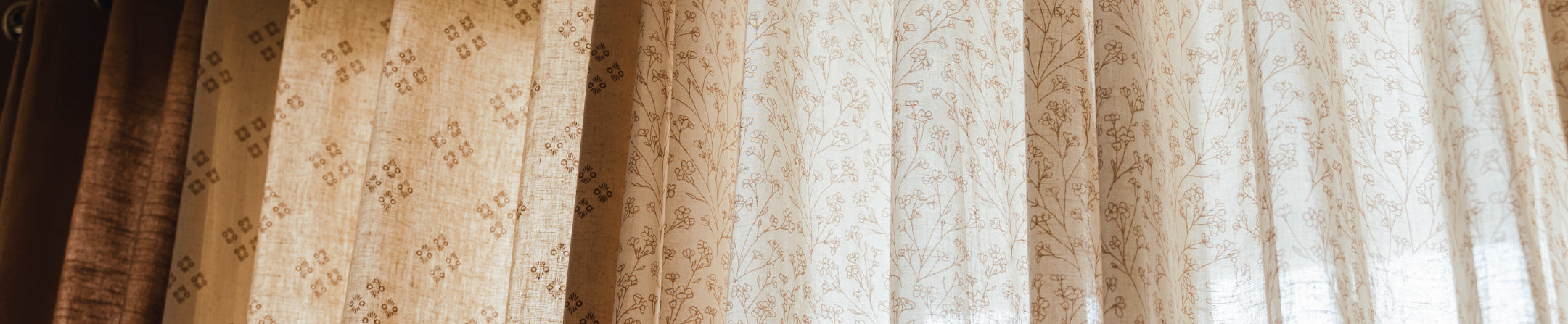

There are rooms where full-length curtains complete the space beautifully. And then there are windows where all that extra fabric simply feels like too much.
In compact apartments, modern bedrooms, work-from-home corners, or living rooms with furniture placed close to the windows, curtains can sometimes add more volume than the room needs. Roman blinds offer a useful middle ground. They give you the softness and character of fabric while keeping the window neat, structured, and visually contained.
Unlike harder-looking window blinds, Roman blinds retain the warmth of textiles. When lowered, the fabric sits across the window; when raised, it gathers into orderly horizontal folds. The result is cleaner than a full curtain treatment without making a home feel stark.
The Yellow Dwelling offers customizable Roman blinds in premium natural cotton and linen fabrics, including solids, textures, florals, and prints. If choosing the right fabric or getting measurements right feels uncertain, you can also book The Yellow Dwelling's Expert Home Service for ₹449, where an expert visits your home to measure the windows, show cotton and linen swatches, and offer design guidance.
What Makes a Roman Blind Different From Other Window Treatments?
A Roman blind is made from a panel of fabric that lies relatively flat when lowered and gathers into horizontal folds as it is raised.
That construction gives it a character of its own. Curtains tend to extend beyond the window and often run towards the floor, making them a larger visual feature within a room. Roman blinds stay much closer to the window opening.
At the same time, they do not lose the softness that makes fabric appealing in a home.
That combination of structured form and textile warmth is what makes Roman blinds particularly suited to modern interiors. You can keep the overall window treatment simple while still introducing colour, weave, pattern, or natural texture.

Why Roman Blinds Suit the Way Modern Homes Are Designed
Modern interiors often ask one room to do more than one job. A dining area may double as a work zone. A bedroom might include a desk. Storage, seating, and furniture are frequently planned right up to the window.
They Keep the Window Visually Contained
Roman blinds concentrate the fabric around the window instead of extending it across the adjoining wall or towards the floor.
This can be especially useful in smaller rooms where long curtains may visually occupy a large portion of the wall. A Roman blind keeps the window clearly defined, leaving more of the surrounding architecture and furniture visible.
For homeowners who like the streamlined appearance associated with modern window blinds but prefer fabric over a harder finish, Roman blinds provide an appealing alternative.

They Add Softness Without Adding Bulk
Minimal interiors can sometimes become overly sharp if every surface is smooth, plain, and structured.
Fabric helps soften that effect.
A cotton or linen Roman blind introduces texture without adding a large expanse of textile to the room. This is particularly useful when you already have cushions, rugs, upholstery, artwork, plants, or decorative objects doing some of the visual work.
The blind can add warmth without competing with them.

They Work Around Furniture More Easily
Think about the windows above:
-
a work desk
-
a dining bench
-
a console
-
a storage cabinet
-
a low bookcase
-
a window seat
A floor-length curtain may not always be the most practical choice for these layouts. A Roman blind remains within the window area, making it easier to use the wall and floor immediately below it.

Roman Blinds Are Minimal, but They Do Not Have to Look Plain
With Roman blinds, minimalism comes largely from the shape of the window treatment. Because the fabric stays contained within or around the window, you can often introduce more personality through the textile without making the room look busy.
A neutral room, for instance, might benefit from a botanical or floral blind. A colourful room may look calmer with a textured solid. Geometric designs can work well in contemporary spaces, while softer florals can bring contrast to straight-lined furniture.
The Yellow Dwelling's Roman blind collection includes several different fabric directions. A style such as the Toffee Brown Textured 100% Cotton Blind relies on texture and an earthy solid colour, while options such as the Roselle Sage Green Floral Printed Cotton Sheer Blind introduce pattern while retaining the neat Roman blind format.
Natural Fabric Changes How a Roman Blind Feels in the Room
A Roman blind already has a fairly structured form. Natural fabrics such as cotton and linen can soften that structure through visible texture, weave, and movement.
This is an important part of The Yellow Dwelling's approach. Its Expert Home Service, for example, allows customers to see and feel cotton and linen swatches at home before choosing a window treatment.
Cotton for an Easy, Versatile Finish
Cotton has a familiar softness that works comfortably across many interior styles.
It can look crisp when used in a plain design, warmer when woven with visible texture, or more expressive when printed with florals and botanicals.
For spaces such as bedrooms, living rooms, studies, or informal dining areas, cotton Roman blinds offer an approachable way to introduce fabric without making the window feel heavy.
The Yellow Dwelling's current range includes options such as the Solid Cream Cotton Plain Customizable Roman Blind, along with textured, floral, and embroidered cotton designs.
Linen for Texture and a Relaxed Premium Look
Linen brings more obvious natural texture to a window.
That makes it particularly useful in minimalist interiors, where an entirely smooth palette can sometimes feel flat. The small variations and tactile quality of linen introduce depth without requiring bold prints or decorative details.
For example, a neutral linen Roman blind can sit quietly against warm whites, wood, stone, cane, and muted furnishings while still giving the room visual interest.
The Yellow Dwelling currently offers customizable linen Roman blinds, including solid neutral options such as its beige linen blind.

Where Do Roman Blinds Make the Most Sense?
Instead of choosing blinds according to a room label alone, look at the way the window interacts with the space around it.
Compact Windows and Smaller Rooms
When the window itself is relatively compact, full curtains can sometimes feel disproportionately large.
Roman blinds keep fabric focused around the opening, which can help the room retain a lighter visual footprint.
Windows Above Desks, Consoles or Dining Areas
Furniture positioned directly beneath a window can make long curtains awkward.
A Roman blind allows the area under the window to remain usable, whether it holds a study desk, breakfast bench, dresser, or console.
Bedrooms That Need a Cleaner Window Treatment
Roman blinds can work particularly well in bedrooms where you want a calm, uncluttered finish.
Light and privacy requirements should guide the choice of fabric and lining. The Yellow Dwelling's customizable Roman blinds currently offer lining options including no lining, 50% lining, and 100% light-blocking options on relevant products.
That allows the look of the blind and the amount of light control to be considered together.
Studies and Work-From-Home Corners
In a work area, glare and visual clutter can both become distracting.
A Roman blind gives you a fabric treatment that can be adjusted during the day while keeping the desk zone relatively clean.
For a study that already contains books, shelves, screens, and accessories, the restrained form of the blind can help keep the window from becoming another busy element.
Living Rooms Where the Window Should Not Dominate
In some living rooms, curtains are meant to be a major decorative feature. In others, the sofa, art, rug, or furniture should take the lead.
A textured solid can stay quiet in the background, while a carefully chosen print can introduce pattern without covering a large area of wall.

Roman Blinds or Curtains? Let the Window Decide
Look at the proportions of the window and what surrounds it.
Roman blinds may make more sense when:
-
the window is relatively compact
-
furniture is positioned underneath it
-
you want to keep more wall or floor area visually open
-
a tailored appearance suits the room
-
you want fabric without the fullness of floor-length curtains
Curtains may make more sense where the opening is large, the ceiling height deserves emphasis, or generous floor-length fabric is intentionally part of the interior scheme.
Inside Mount or Outside Mount? A Small Decision That Changes the Look
Roman blinds can typically be installed using an inside or outside mount, and the choice can noticeably affect the finished appearance.
Inside Mount
An inside-mounted blind sits within the window recess.
When the window construction allows it, this can create a particularly contained, almost built-in look. It can suit homeowners who want the window frame to remain visible and prefer a very precise finish.
Outside Mount
An outside-mounted blind sits above and around the window opening.
This can work where the recess is unsuitable for an inside mount or where additional coverage around the opening is preferred.
The Yellow Dwelling supports both inside- and outside-mount configurations for its Roman blinds. Its measurement guidance also stresses that Roman blinds are custom-made, making accurate sizing particularly important.
Window handles, recess depth, opening style, surrounding wall space, and dimensions can all affect which mounting approach makes sense. This is one of the areas where an expert home measurement can save guesswork.

Why Custom Roman Blinds Look More Minimal Than a Poorly Fitted Blind
Minimal interiors tend to expose mistakes rather than hide them.
When there are fewer decorative distractions, an incorrectly sized blind becomes easier to notice.
That is why custom Roman blinds are not simply about having more design choices. They help create the precision that makes a minimal window treatment work.
Several details affect the final result:
-
blind width
-
blind drop
-
mounting position
-
fabric choice
-
lining
-
window proportions
-
placement in relation to the frame
A blind that is noticeably too narrow can leave awkward gaps. One that extends too far may appear visually heavy. Uneven positioning can make an otherwise carefully designed room feel unfinished.
The Yellow Dwelling's Roman blinds are customizable by size, with multiple fabric and lining choices available across its current collection.
Before Ordering, See the Fabric in Your Actual Home
Choosing fabric from a screen has limits.
A warm beige can look different beside a cool grey wall. A print that appears subtle online might feel stronger in a small room. Linen texture can also become more noticeable when sunlight falls across it.
This is where The Yellow Dwelling's Expert Home Service becomes useful.
For a booking fee of around ₹449 in most cities, an expert visits your home to take measurements and show cotton and linen fabric swatches. The service also includes design guidance, advice on suitable window treatments, lining options, and assistance with placing the order. Installation, where required, can be arranged separately at an additional cost.
For Roman blinds in particular, being able to check the fabric against your actual walls, furniture, and daylight can make the choice much easier.

Conclusion
Roman blinds work best when the architecture and layout call for a window treatment that feels softer than conventional blinds but more contained than full-length curtains.
The Yellow Dwelling's custom Roman blinds combine this tailored form with premium natural cotton and linen fabrics. If you would prefer to see those fabrics in your home before deciding, the Expert Home Service can assist with measurement, swatches, lining choices, and design guidance.