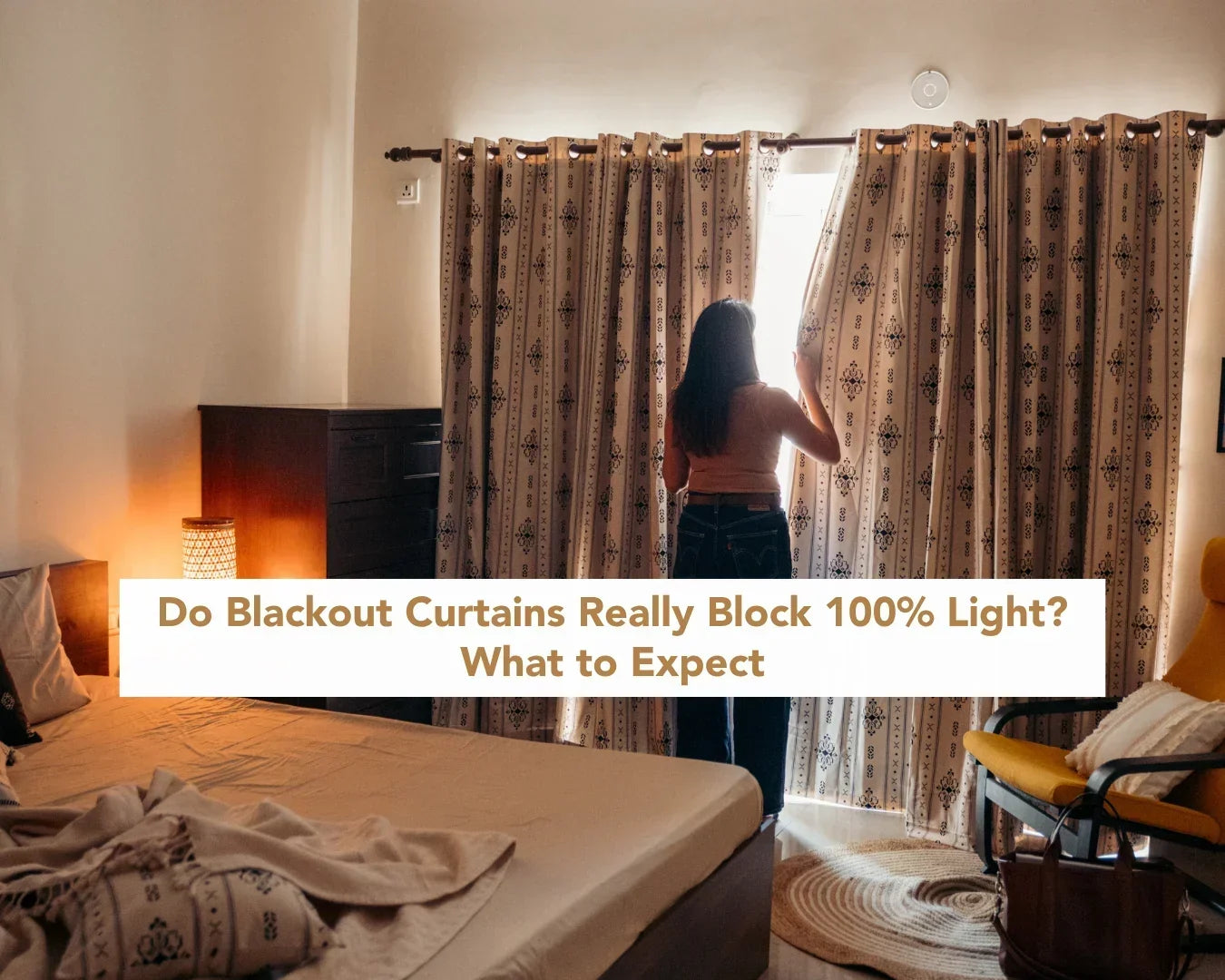

Bay windows are beautiful, but they are not always easy to dress. Their angled panes, extra depth, and projecting shape bring in generous natural light, but they can also make privacy, glare control, and measurements more complicated than a regular flat window. This is especially true when you are choosing blackout curtains or Roman blinds for a bedroom, reading nook, living room, or dining corner.
The right choice depends on how the bay window is used. Curtains create softness, visual height, and fuller coverage. Roman blinds keep the bay compact, neat, and easy to operate pane by pane. In some homes, a layered look with Roman blinds and room darkening curtains gives the most balanced result.
If the bay window has awkward angles or a built-in seat, The Yellow Dwelling’s Expert Home Service can help you make the decision at home. For a nominal fee of ₹449, an expert can assess your windows, take measurements, show cotton and linen fabric options, and guide you on whether curtains, Roman blinds, or a combination will suit your space best.
Why Bay Windows Need a Different Approach

A bay window is not just one large window. It usually has three or more sections placed at angles, sometimes with a ledge, a low cabinet, a reading seat, or furniture placed close to it. This means the window treatment has to work with the shape instead of hiding it awkwardly.
Before choosing between curtains and Roman blinds, look at these factors:
-
How many window sections are there?
-
Are the panes placed at sharp or soft angles?
-
Is there enough space between the frames?
-
Does the bay have a window seat, ledge, shelf, or storage below?
-
Which direction does the sunlight come from?
-
Do individual panes need to open separately?
-
Is there enough wall space for curtain panels to stack when open?
For bay windows, the final look depends as much on measurement and installation as it does on fabric choice. A beautiful curtain can still look heavy if there is no stacking space. A Roman blind can look crisp only when every pane is measured accurately.
When Blackout Curtains Work Best for a Bay Window

Curtains work beautifully when you want the bay window to feel soft, full, and visually important. They are especially useful when the window is large, extends close to the floor, or sits in a bedroom or media space where stronger coverage is needed.
When You Want the Bay to Feel Like One Large Window
If your bay window feels too segmented, curtains can help bring all the panes together visually. A continuous or specially planned curtain track can make the entire bay feel like one generous window rather than three separate sections.
This works well in living rooms and bedrooms where the bay is meant to be a focal point. Instead of treating each pane differently, the fabric frames the whole space and gives the room a more finished look.
For this kind of setup, fabric choice matters. Cotton and linen curtains from The Yellow Dwelling can bring softness without making the room feel too heavy. If you want stronger privacy or deeper darkness, you can explore suitable lining options instead of assuming that every natural fabric curtain will block light on its own.
When the Bay Extends Close to the Floor
Floor-length curtains are a good choice when the bay window is tall, wide, or nearly full-length. They draw the eye upward and make the room feel taller. In bedrooms and formal living areas, this can create a more elegant, polished effect.
The key is to plan where the curtains will stack when they are open. If the panels sit directly in front of the glass, they can reduce daylight and make the bay feel smaller. Where space allows, the curtain panels should stack beyond the glass so the bay remains open and bright during the day.
This is where custom measurements become important. Ready-made curtains may not account for the bay’s angles, track shape, or stacking area. Custom window treatments are more practical when the window has unusual proportions.
When Privacy and Room Darkening Matter
Bay windows often receive light from more than one direction. This is lovely during the day, but it can be a concern in bedrooms, street-facing rooms, and television spaces.
Blackout curtains for bedroom use are especially helpful when you want stronger coverage for sleep, privacy, or reduced outside light. However, it is important to understand the difference between light-filtering curtains, room darkening curtains, and blackout curtains.
Light-filtering cotton or linen curtains soften sunlight and add privacy during the day. Room darkening curtains reduce a larger amount of light and work well for bedrooms or living rooms that need more control. Blackout curtains offer the strongest coverage when paired with the right lining, fabric construction, and installation planning.
For a bay window, even the best lining will not perform well if there are large side gaps, wrong track placement, or poorly measured corners. That is why the fit is just as important as the fabric.
When You Want More Fabric, Colour, or Pattern in the Room
Bay windows can sometimes feel angular or hard because of their frames and corners. Curtains soften that architecture. They also give you more surface area to introduce colour, texture, and pattern.
For a calm home, solid cotton or linen curtains can work well. For a warmer and more lived-in space, understated prints, gentle florals, stripes, or nature-inspired patterns can add personality without overpowering the bay. The Yellow Dwelling’s cotton and linen curtain options suit this kind of look because they bring texture and softness while still feeling natural.
If the room already has printed rugs, cushions, or wallpaper, choose simpler curtains. If the room is neutral, the bay window can carry a subtle pattern beautifully.
When Roman Blinds Work Better for a Bay Window

When we say “blinds” here, we are referring specifically to Roman blinds. The Yellow Dwelling offers Roman blinds, not roller blinds. Roman blinds are fabric-based window treatments that fold neatly when raised and sit flat when lowered. They feel softer and more home-like than hard office-style blinds.
Roman blinds are often the better choice when you want the bay window’s shape to remain visible or when the window has a seat, desk, dining bench, or storage below it.
When There Is a Window Seat or Storage Below
A bay window with a reading seat is one of the most charming corners in a home. Full-length curtains, however, can cover the seat, bunch around the cushion, or make the area less usable.
Roman blinds stop at the window. This keeps the seat, ledge, or storage unit clear. You can still use the bay as a reading nook, coffee corner, or display area without fabric falling over it.
For this setup, room darkening Roman blinds can be a practical choice. They can reduce glare during the day while keeping the nook clean and functional.
When Each Window Section Needs Separate Control
Bay windows receive sunlight from different angles throughout the day. One pane may get harsh morning light while another remains shaded. In this situation, individual Roman blinds give better control than one continuous curtain.
You can lower one blind for glare, keep another open for daylight, and adjust the third for privacy. This is especially useful for work-from-home corners, dining areas, and street-facing bays.
Separate control is also helpful when one window opens more often than the others. With individual Roman blinds, you do not need to move the entire treatment just to access one pane.
When the Bay Is Compact or Surrounded by Furniture
Not every bay window is large and dramatic. Some are small, narrow, or placed close to a sofa, desk, console, or dining bench. In such spaces, full curtains may feel bulky.
Roman blinds occupy less visual and physical space. They sit close to the window and keep the room looking neat. This makes them a good option for compact apartments, dining corners, or rooms where furniture is already close to the glass.
If the room needs a lighter look, choose natural cotton or linen Roman blinds in soft solids or gentle prints. If the room needs more coverage, select a room darkening lining option.
When You Want to Preserve the Bay’s Shape
Some homeowners love the architectural outline of a bay window and do not want to hide it behind fabric. Roman blinds are ideal for this. Since each blind is made for an individual pane, the window’s angles remain visible.
This approach works well for sharply angled bays, traditional homes, and spaces where the bay itself is the design feature. It also creates a cleaner, tailored appearance compared to flowing curtains.
Blackout Curtains vs Roman Blinds for Bay Windows: A Practical Comparison
|
Consideration |
Blackout Curtains / Room Darkening Curtains |
Roman Blinds |
|
Overall look |
Soft, flowing, and decorative |
Neat, tailored, and compact |
|
Architectural shape |
Can visually unite the whole bay |
Highlights individual window sections |
|
Window seat |
May cover or crowd the seat |
Keeps the seat clear |
|
Light control |
Opens across the bay or from the sides |
Each section can be adjusted separately |
|
Small rooms |
Can feel fuller or heavier |
Saves visual and floor space |
|
Room darkening |
Suitable with the right lining and coverage |
Suitable with appropriate fabric and lining |
|
Measuring |
Needs careful track, length, and fullness planning |
Needs precise measurements for every pane |
In simple terms, curtains suit a soft, room-framing look, while Roman blinds suit compactness and pane-by-pane control.
Should You Treat the Bay as One Window or Three Separate Windows?

This is one of the most important decisions when dressing a bay window. You can either treat the bay as one large feature or as separate panes that work independently.
One Unified Treatment
Choose one unified curtain treatment when you want to:
-
Create a single focal point
-
Add visual height
-
Make the room feel more finished
-
Cover all panes together
-
Bring softness to the entire wall
This approach works especially well when the bay is large and there is enough space for the curtains to move smoothly. It may require an angled track, curved track, or compatible corner fittings depending on the bay’s shape.
For bedrooms, a unified curtain treatment with blackout lining can create a calm and cosy look. For living rooms, room darkening curtains can soften glare while making the space feel elegant in the evening.
Individual Treatments for Each Pane
Choose individual Roman blinds when you want to:
-
Operate each pane separately
-
Work around opening windows
-
Manage sunlight from different angles
-
Preserve a window seat
-
Keep the treatment visually compact
-
Highlight the bay’s structure
This approach is especially useful for sharply angled bays or smaller rooms. It is also practical when the bay has furniture close to it.
Can You Combine Curtains and Roman Blinds on a Bay Window?

Yes, curtains and Roman blinds can be combined on a bay window. However, layering should be used when it solves a real design or functional need, not just because it looks luxurious.
A layered setup works well when you want Roman blinds for daytime glare and pane-by-pane privacy, along with full-length curtains for evening softness and fuller coverage. This can be a good option for bedrooms, media rooms, or living rooms that face a street.
To keep the bay from looking too busy, coordinate the fabrics carefully. Use one statement pattern with a complementary solid, or keep both layers within a restrained colour palette. For example, you could use printed Roman blinds with solid linen-look curtains, or plain Roman blinds with softly patterned curtains.
Natural fabrics help layered treatments feel warmer and less synthetic. Cotton and linen textures can make the bay window feel inviting without adding unnecessary heaviness.
Choose According to How the Bay Window Is Used

The best window treatment often depends on the room, not just the window.
Bay Window With a Reading Seat
For a bay window with a reading seat, individual Roman blinds are usually the most practical choice. They keep the seat clear and allow each pane to be adjusted separately.
If you still want softness, place curtains outside the bay rather than inside it. This gives you the cosy look of curtains without making the seating area difficult to use.
Bay Window in a Living Room
If the bay window is the visual centre of the living room, curtains can frame it beautifully. Room darkening curtains are helpful if the space gets harsh afternoon light or if you watch television in the room.
Roman blinds are better when a sofa, console, or indoor plant arrangement sits close to the glass. They keep the window area clean and accessible.
Bay Window in a Bedroom
For a bedroom, privacy and darkness matter more. Blackout curtains for bedroom bay windows can create a softer, more restful feel, especially when the curtains cover the full bay properly.
Roman blinds are useful when space is limited or when there is a seat below the window. A layered combination can work well if you want daytime light control from the blinds and a cosier, darker effect from curtains at night.
Bay Window in a Dining Area
Dining areas usually need a clean and practical treatment. If benches, chairs, or a table sit close to the bay, Roman blinds are easier to manage than full-length curtains.
Cotton or linen Roman blinds can keep the setting relaxed and warm. Choose lighter shades if the dining area is compact, or subtle prints if the rest of the room is simple.
Bay Window Beside a Balcony or French Door
If your bay window sits near a balcony or French door, the treatments do not have to match exactly. However, they should coordinate in colour, texture, or pattern.
For example, you may use Roman blinds on the angled bay to keep it compact, and door window curtains on the balcony or French door for fuller movement and coverage. This keeps both areas functional while making the room feel connected.
Why Cotton and Linen Suit Bay Windows
Bay windows already have strong lines because of their angles and frames. Cotton and linen help soften those lines naturally.
Cotton has a soft, versatile drape that works well for relaxed family spaces, bedrooms, and living rooms. Linen brings texture and a slightly more elegant, lived-in look. Both fabrics suit homes that need warmth without looking overly formal.
For bay windows, natural fabrics work well because they can be used in both curtains and Roman blinds. Light-filtering cotton or linen curtains can soften daylight, while lined curtains or lined Roman blinds can provide stronger privacy and room-darkening performance.
The Yellow Dwelling’s focus on premium cotton and linen fabrics makes sense for homeowners who want window treatments that feel warm, tactile, and thoughtfully made. Instead of choosing overly synthetic-looking treatments, natural fabric curtains and Roman blinds can make a bay window feel more connected to the rest of the home.
Bay-Window Measuring Mistakes That Can Affect the Final Look

Bay windows need careful measurement. A small mistake can affect how the curtains fall, how the blinds fold, or how much light leaks around the edges.
Here are common mistakes to avoid:
Measuring Only the Total Bay Width
A bay window should not be measured as one flat window. Each pane, frame, and angled section needs to be considered separately. This is especially important for Roman blinds because every blind must fit its own section neatly.
Ignoring Corner Angles and Handles
Handles, locks, and projecting corners can interfere with both curtains and Roman blinds. If these are ignored, the final treatment may not open or close smoothly.
Forgetting Curtain Stacking Space
Curtains need somewhere to go when they are open. If there is no stacking space, the panels may block part of the glass and reduce daylight.
Choosing an Inside Mount Without Enough Depth
Inside-mounted Roman blinds need sufficient recess depth. If the frame is too shallow, an outside mount may provide better coverage and a cleaner finish.
Not Accounting for Seats, Skirting, or Furniture
A window seat, radiator, skirting, console, or sofa can change the best treatment choice. Curtains may need to sit outside the bay, while Roman blinds may need to be mounted carefully to avoid obstruction.
This is why bay windows are a good case for professional measurement. The Yellow Dwelling’s Expert Home Service helps avoid guesswork by assessing the window, the room layout, and the fabric options together.
How to Make the Final Decision
Choose blackout curtains or room darkening curtains when:
-
You want softness and visual height
-
The bay is large or almost floor-to-ceiling
-
The window is a major decorative feature
-
You need broader privacy or room-darkening coverage
-
The room is a bedroom, media room, or formal living space
Choose Roman blinds when:
-
The bay has a seat, shelf, or furniture below
-
Space is limited
-
You want to operate panes independently
-
You want the bay’s shape to remain visible
-
The room needs a neat, compact treatment
Combine both when:
-
Daytime and nighttime needs differ
-
You want independent light control without losing softness
-
The room needs both practicality and decorative warmth
-
The bay window is large enough to handle layering
There is no single right answer for every bay window. The best choice is the one that fits your room’s light, privacy, furniture, and daily use.
Get Bay Windows Measured and Styled at Home
Bay windows are beautiful, but they are rarely standard. Their angles, corners, handles, and seating areas can make online guesswork difficult. This is where The Yellow Dwelling’s Expert Home Service can be useful.
For a nominal fee of ₹449, the service brings expert guidance to your home. It can help with:
-
Measuring every section accurately
-
Deciding between curtains and Roman blinds
-
Choosing premium cotton or linen fabrics
-
Understanding light-filtering, room darkening, and blackout lining options
-
Coordinating the treatment with walls, furniture, cushions, and adjoining doors
-
Planning suitable installation and coverage
This is especially helpful when you are selecting blackout curtains for bedroom bay windows, where even small gaps can affect the final room-darkening result.
Final Thoughts: Curtains or Blinds for Your Bay Window?
For a bay window, curtains and Roman blinds solve different needs. Blackout curtains work best when you want softness, visual height, and fuller coverage. They are especially useful in bedrooms, media spaces, and large bay windows that need a more finished look.
Roman blinds work better when the bay has a window seat, compact layout, or individual panes that need separate control. They preserve the shape of the bay and keep the area clean and practical.
A layered solution can offer the best of both when the space allows it: Roman blinds for daytime control and curtains for evening softness and privacy.
With The Yellow Dwelling’s premium cotton and linen fabrics, custom sizing, and Expert Home Service at ₹449, you can choose a bay-window treatment that looks beautiful, works practically, and feels made for your home.